
Do Dogs Really Need a Warm-Up Before Running? Here’s What I Found Out
September 18/2026
Why I started looking into this
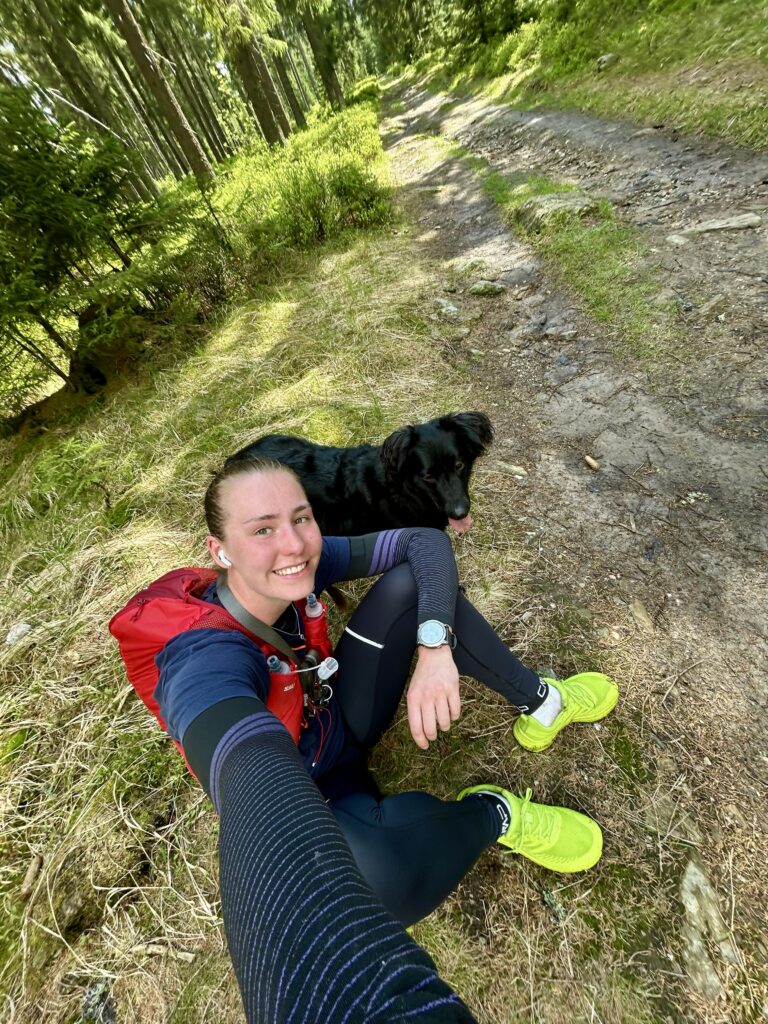
It’s been a year since Gina started joining me on every training run. As our mileage crept up, I found myself thinking less about her fitness and more about how to keep her from getting injured as we kept building.
The goal is simple: I want us to be able to run together for as long as possible, and that means thinking about injury prevention now, before something goes wrong.
Warm-up vs. conditioning training
These two get mixed up constantly, but they’re not the same thing.
- A warm-up prepares the body for the effort that’s about to happen — it gradually raises heart rate and breathing, warms up the muscles, and gets the nervous system ready to perform. It should be done before every run.
- Conditioning training is different: it’s the long-term, systematic work on strength, stability, endurance, and proprioception (body awareness in space). It belongs in a regular training plan, not in the few minutes before a run.
What the research says
A proper warm-up should last 10 to 15 minutes — that’s how long it takes for the cardiovascular and respiratory systems to fully adapt. Cut it short, and the muscles never really get the blood flow and heat they need. Go too long, though, and it can backfire, tiring your dog out before the real effort even starts. Be aware that breed, age, and weather all play a role too, so there’s no single formula that works for every dog, every time.
One thing does seem clear, though: static stretching — holding a limb at the end of its range — isn’t a great idea for dogs. Unlike a person, your dog can’t tell you when they’ve reached their limit while you’re slowly stretching them out, which makes overstretching a real risk. Dynamic stretching, where the joint moves actively through its range instead of being held still, is the safer choice.
How I actually warm Gina up before a run
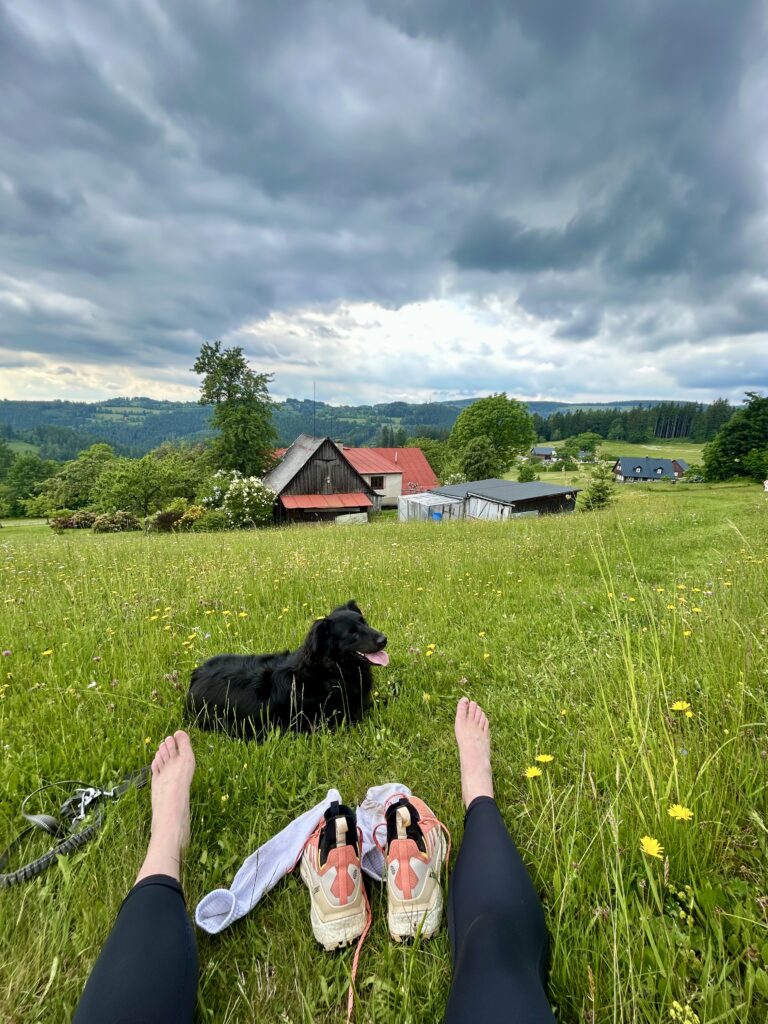
I wanted this to fit into my own warm-up too, so I’d be just as ready for the run as she is. In practice: I start with foam rolling and activation, then Gina and I walk to wherever we’re starting from, I spend a few minutes on her warm-up, and I finish my own once she’s done.
Gina’s routine looks like this:
- a brisk walk, at least 5 minutes
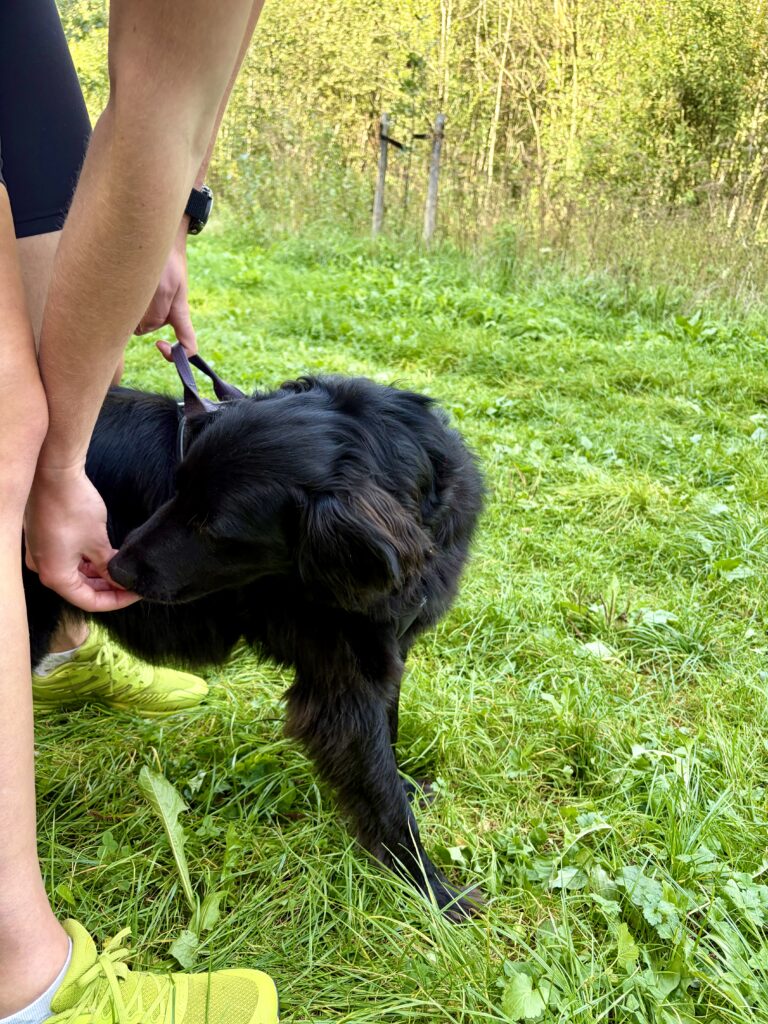
- dynamic head movements chasing a treat — up, down, side to side
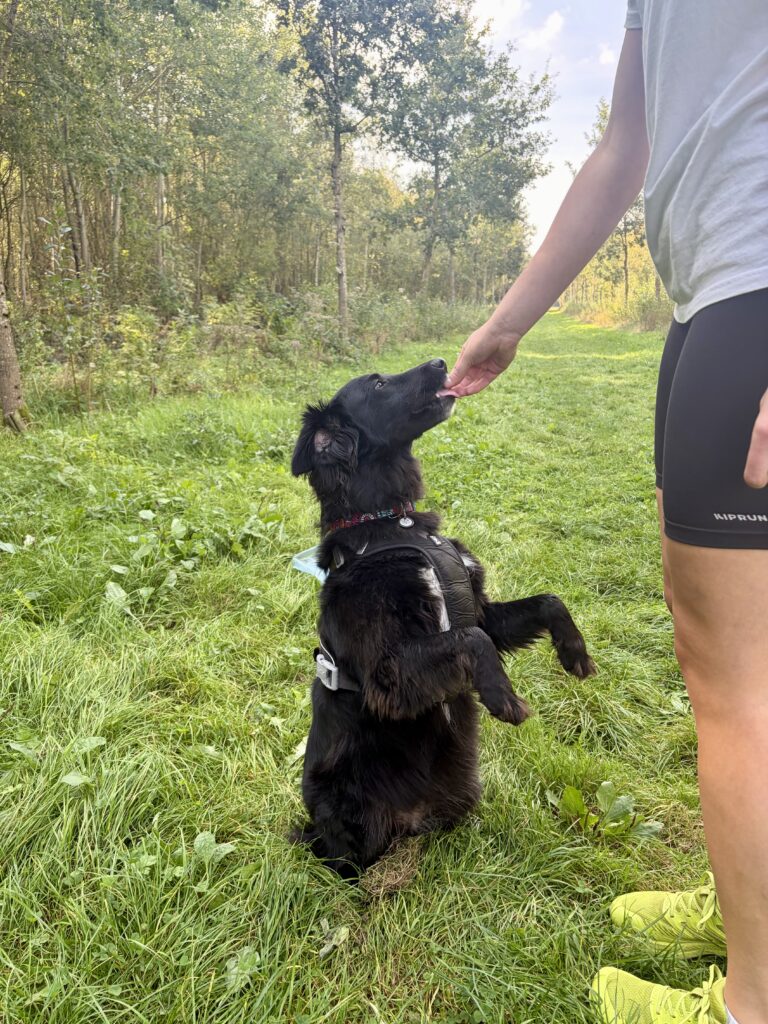
- sit-up/beg, paw, and backing up — great for proprioception
After that, I keep her moving lightly (she wanders around while I finish my own warm-up), and we head straight into the run.
Just like for us, a cool-down matters just as much — don’t skip it, even when all you want to do after a run is collapse.
What's at risk if you skip it
I’ve been lucky — after almost a year of running together, nothing has happened to Gina, even though I used to underrate her warm-up and cut it down to a short walk and a leg stretch. But with our mileage increasing, I don’t want to leave anything to chance anymore.
Skip the warm-up, and you’re risking:
- higher injury risk — cold muscles strain or tear more easily under sudden load, and tendons and ligaments are less elastic and worse at absorbing impact
- worse performance — nerve signals travel more slowly, muscles contract less efficiently, and joints have a reduced range of motion
Skip the cool-down, and you’re risking:
- blood pooling in the muscles instead of circulating normally
- slower clearance of metabolic waste, which usually means more soreness and stiffness the next day
The takeaway
Warm-up: 10–15 minutes · walking → dynamic exercises → sport-specific drills
- dynamic stretching, not static
Cool-down: 5-10 minutes · easy walking until your dog’s breathing settles
- don’t forget water and a treat
One last thing: I’m not a vet, and I’m not a physiotherapist either. I used to work as a veterinary nurse, but this specific topic never actually came up in my day-to-day practice — everything here is what I’ve read up on and tested myself with Gina. It’s better to discuss your dog’s training plan with a vet, especially for puppies, seniors, or dogs with health issues.
Newsletter
Signup for news and special offers!
Thank you!
You have successfully joined our subscriber list.
Contact Us
Passionate about the outdoors? So are we. Reach out to share a route, collaborate, or simply say hi.